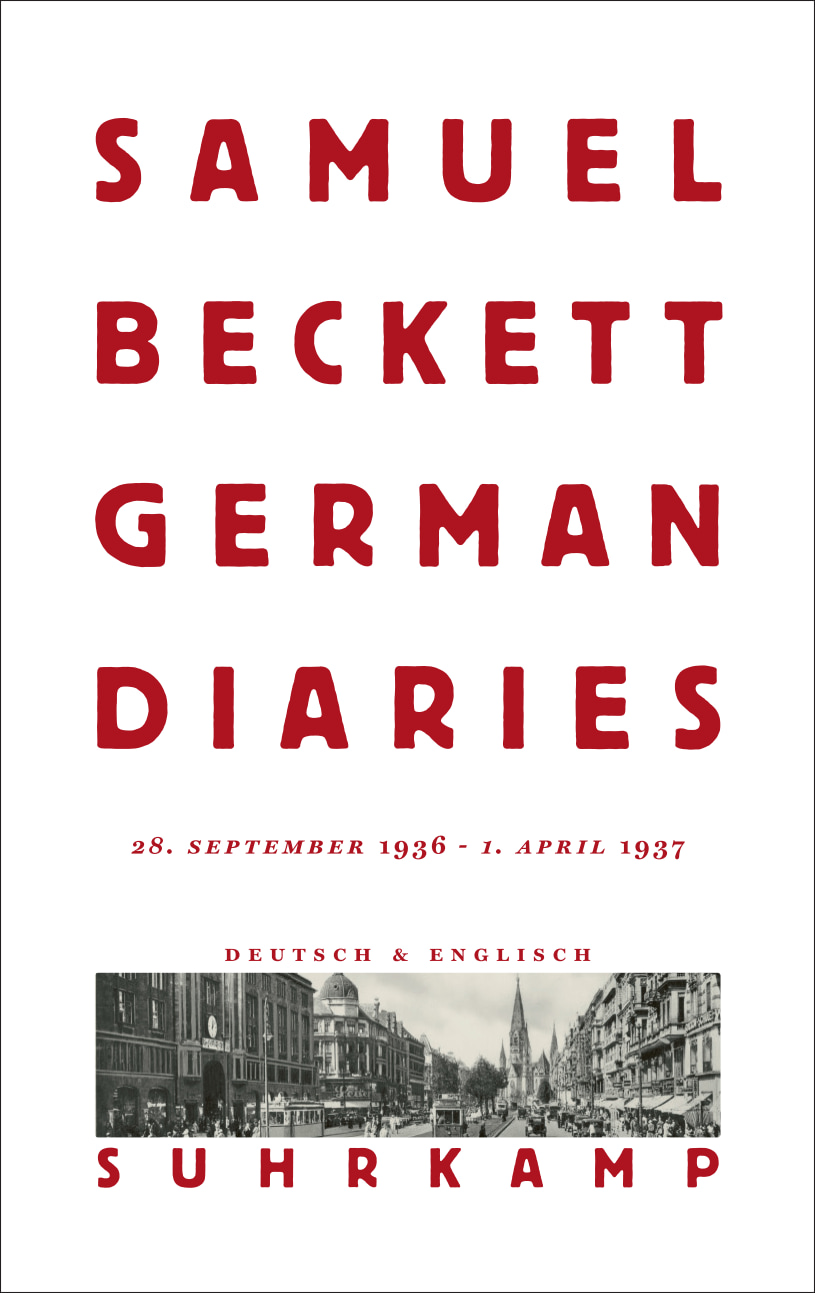
«I am always depressed and left with sense of worthlessness at the beautifully applied energy of these people (…). In comparison I am utterly alone (…) & without purpose alone and pathologically indolent & limp & opiononless & consternated. The little trouble I give myself, this absurd diary with its list of pictures, serves no purpose, is only the act of an obsessional neurotic. (…) I have never thought for myself. (…) My mind is blank, a dim chaos, 90% of my waking hours , the other ten a tiny part is sharply lit with nutritional, sexual and endaemonical positions.
Perhaps I am this equal to the relatively trifling act of organisation that is all that is needed to turn this dereliction, profoundly felt, into literature. Spes unica.»
Vernichtende Generalabrechnung. Aus der Verzweiflung skizziert Beckett allerdings mit bemerkenswerter Klarsicht den Weg, wie er eines der bedeutendsten literarischen Werke des 20. Jahrhunderts erschaffen wird. Die einzige Hoffnung hat sich erfüllt.
Ausgelöst hat die Selbstanalyse Will Grohmann, ein offenbar sehr eloquenter Kunsthistoriker, der die Nazizeit in innerer Emigration überlebte, mit einer Sammlung von Werken verbotener Künstler. Nach dem 2. Weltkrieg Karriere als Professor in West-Berlin, und Wegbereiter der abstrakten Malerei.